
Kiran Paul

https://images.app.goo.gl/EXvmydPq78Ai9xUs8

In a coordinated effort to confront Beijing’s alleged cyber espionage activities, the United States Department of Justice has unsealed an indictment targeting seven Chinese state-sponsored hackers.

The indictment alleges a widespread, 14-year campaign aimed at U.S. and foreign targets, including businesses, political officials, and critics, in pursuit of China’s economic espionage and political spying objectives. Simultaneously, the U.S. Treasury Department has imposed sanctions on two hackers and a front company involved in breaching critical U.S. infrastructure, including defence and energy sectors.
Kiran Paul

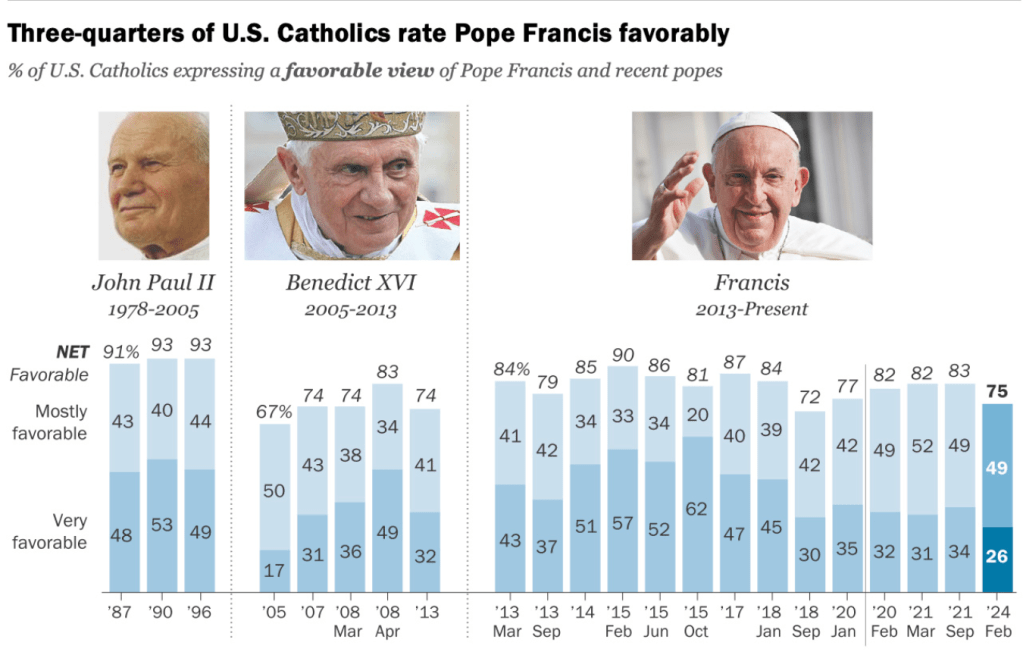
A recent survey conducted by the Pew Research Center has revealed a significant increase in polarization among U.S. Catholics regarding their opinions on Pope Francis, highlighting a growing divide within the community. The findings shed light on divergent viewpoints among Catholic Democrats and Republicans, particularly concerning social and theological issues.

According to the survey, while a substantial majority of U.S. Catholics still hold a favourable view of Pope Francis, partisan affiliations strongly shape these perceptions. Approximately 75% of all U.S. Catholics maintain a positive outlook toward the pontiff. However, when examined through a political lens, a stark contrast emerges nearly 89% of Catholic Democrats or those leaning Democratic express favourable views, compared to just under 63% of Catholic Republicans or Republican-leaning individuals. Significantly, the favourability ratings among Republican-leaning Catholics have experienced a decline, marking the largest partisan gap in approval of Pope Francis since the beginning of his papacy.