Joseph Oyewole Oyekunle
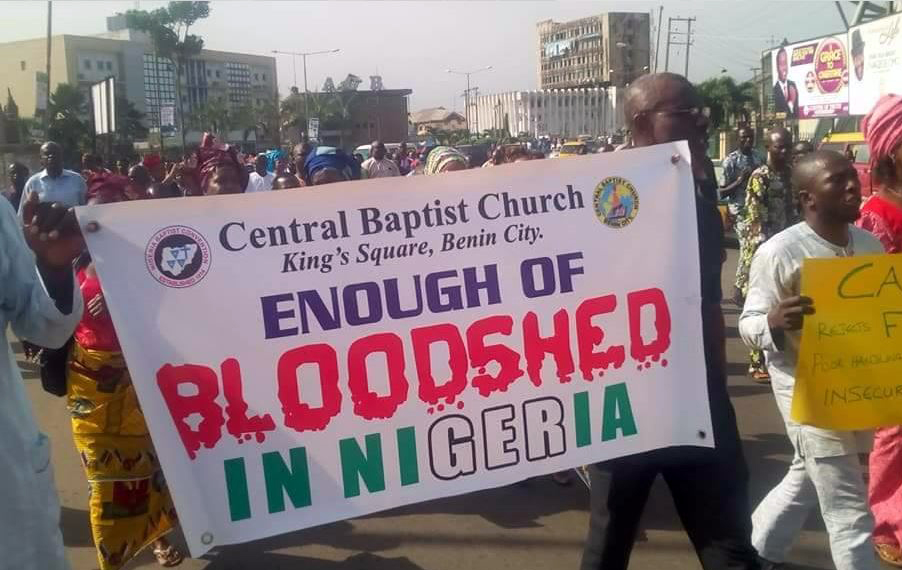
Over the years, Christians in Nigeria particularly from the Northern part of the country faced severe persecutions due to the activities of the extremist groups such as Boko Haram and Islamic State West Province (ISWAP).
This persecution is deeply rooted in historical tensions stemming from Nigeria’s colonial past, where religious divisions were exploited for political control, leading to long-standing grievances between the predominantly Muslim north and the largely Christian south. As a result, violent incidents targeting Christian communities have become alarmingly common, resulting in loss of life, displacement and widespread trauma among affected populations.
However, in recent years there is a rising tide of violence against the Christians in the southern part of the country which was once considered relatively safe. The growing crisis raises urgent questions about the insecurities facing Christian communities and the inability of the Nigerian government to protect its citizens.
According to Bishop Matthew Ndagaoso, the Archbishop of the Archdiocese of Kaduna, during an online conference in June 2022, noted that for over 14 years, Nigeria has been dealing with the threat posed by Boko Haram in the northeast, alongside rampant banditry in the northwest. Furthermore, he highlighted the increasing frequency of kidnappings for ransom and ongoing conflicts with Fulani herders, which have all contributed to a pervasive atmosphere of fear and trauma experienced among Christians in the southern part of the country.
Southern part of Nigeria has historically been a stronghold of Christianity, with the majority of its population adhering to various Christian denominations, including Catholicism, Anglicanism and Pentecostalism. Unlike the predominantly Muslim north, the south has long been regarded as a region of religion tolerance and relative peace. In recent years, we have seen the disturbing increase in violence targeting Christians exacerbated by a combination of violent extremism. Banditry and ethnic conflicts.
This unabated crisis has led to a number of Catholic priests, Pentecostal pastors and Christians being kidnapped for ransom or killed. According to L’Osservatore Romano in an interview with the Secretary General of the Catholic Secretariat of Nigeria, Father Michael Banjo, he commented that Caritas Nigeria in collaboration with the Catholic Secretariat of the Bishop’s Conference of Nigeria conducted a study on the number of priests and seminarians kidnapped and killed from 2015 till date and its heart wrenching to know that there have been 201 kidnappings and 15 killings. Although, these unprecedented figures are useful for understanding the phenomenon of the problem plaguing the country but remain extremely partial because it only considered 40 out of 60 dioceses in Nigeria and did not include male and female congregation.
In recent times, the impudence at which these gunmen invade Churches and religious houses have increasingly become alarming and dangerous. In 2022, dozens of Catholics were killed on Pentecost Sunday when a church in Ondo State was attacked by unknown gun men and sporadically shot at the people in the church. Several other attacks have been reported in States like Enugu, Anambra and Ebonyi.
Reports have indicated that these attacks are carried out by armed Fulani militants who migrated to the South disguising themselves as herders but engaged in these heinous attacks on Christian villages and farmers, leading to fears of an orchestrated agenda to destabilize Christian communities. Also, the failure of law enforcement agencies to prevent or respond effectively to attacks has emboldened perpetrators.
The situation has sparked significant national and international concern, with advocacy groups and religious organizations calling for urgent responses to protect religious freedoms and lives of the people.
Ultimately, the ongoing persecutions of Christians in Southern Nigeria clearly reflects broader socio-political issues within the country and the ineptitude of the Government in handling these menaces with kid gloves. There is an urgent need for comprehensive efforts to promote religious tolerance and protects the right of marginalized communities.
 Acta Diurna