Von Ryan L. Relos
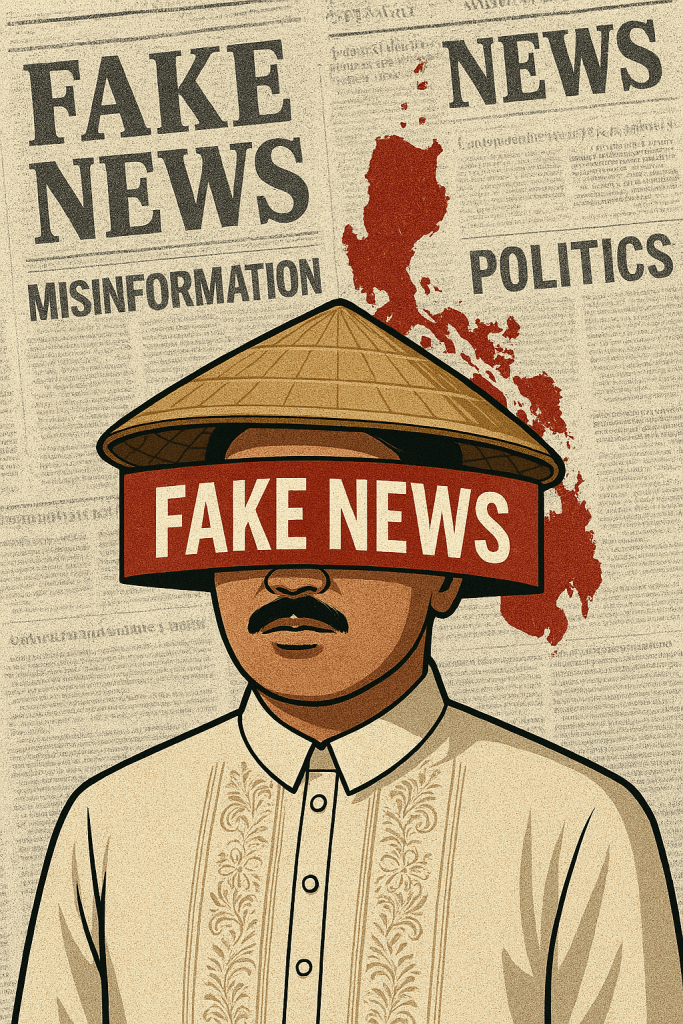
The Philippines faces a growing crisis of fake news and disinformation, a problem an analyst warns “can get worse” amid the upcoming #Halalan2025 (midterm) elections. This surge of online falsehoods is not only destroying public trust in traditional media but also actively dividing Filipinos and potentially influencing the political landscape.
The ease with which fake news is produced and disseminated through modern communication tools, especially social media, amplifies its dangers, leading to a polarized nation.
The Presidential Communications Office (PCO) has lamented that the nation is being divided by online disinformation, misinformation, and fake news, with Filipinos being “pitted against Filipinos” online. PCO Secretary Jay Ruiz likened this division to the discord seen in the United States. He emphasized the potent nature of repeated falsehoods, stating, “Lies, repeated a thousand times, becomes the truth. We have to fight lies with truth. The voice of truth should be louder than lies”. Malacañang, the official residence and workplace of the Philippine President, has also cautioned the public about the increasing spread of fake news, particularly concerning sensitive topics like the supposed arrest of former President Rodrigo R. Duterte.
Social media platforms are identified as a primary channel for the rapid spread of fake news. According to TNGlobal, while the Philippines may not have the highest internet and social media penetration rates in Southeast Asia, Filipinos spend the longest hours online, making them highly susceptible to online misinformation. The “attention economy” driving social media, where capturing audience attention can lead to profit, incentivizes the production and spread of sensational and often false content.
The impact of fake news is far-reaching. A survey by PUBLiCUS Asia revealed that 68 percent of respondents use internet search engines as their main source of political and current affairs information, followed closely by Facebook at 66 percent and television at 65 percent. This highlights the significant reliance on digital platforms where fake news can easily proliferate.
The survey also found that “online misinformation is eroding public trust in traditional news sources across the Philippines”. Mainstream media outlets, despite their continued relevance, are facing declining public trust attributed to the rise of fake news. For instance, ABS-CBN Online saw a five-point drop in trust rating, while TV5/Interaksyon fell by three points. The polling body noted the “growing skepticism toward news organizations, with many Filipinos questioning the credibility and accuracy of information disseminated by various outlets”.
Recognizing the severity of the problem, various steps are being taken and proposed to combat fake news in the Philippines. PCO Secretary Jay Ruiz welcomed the House Tri-Committtee’s inquiry into fake news and suggested closer collaboration between the PCO, Department of Justice (DoJ), and Department of Information and Communications Technology (DICT) to neutralize malicious online content.
Malacañang has stated that the PCO is collaborating with law enforcement agencies to pursue those spreading fake news. The National Bureau of Investigation (NBI) has even sought assistance from Interpol to locate overseas Filipinos spreading false information.
Aside from government efforts, here are several crucial steps to combat fake news as increasing awareness of available fact-checking tools; strengthening citizen engagement in fact-checking through continuous training and education; developing critical thinking skills from a young age and teaching them basic digital intelligence; integrating media literacy into the basic education curriculum; viewing the fight against disinformation and misinformation as a civic and moral responsibility.
Fake news poses a significant threat to the Philippines, contributing to a “great divide” among its people and degrading trust in vital institutions.
 Acta Diurna