Pope Francis pastoral vision
Joseph Oyewole
When Pope Francis urged priests to “smell like the sheep,” he was not merely crafting a memorable phrase, he was articulating a bold vision for a church deeply rooted in the lives of its people. This simple yet striking metaphor captures the heart of his pastoral mission in a call for shepherds to walk alongside their flock, embrace their struggles and reflect the compassion of Christ amidst the realities of their daily existence.
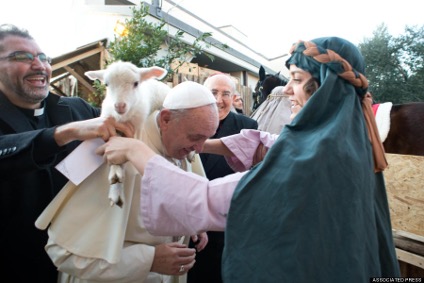
He epitomized this pastoral vision in his homily at the first Chrism Mass of his pontificate on 28th March, 2013, exhorting priests to be shepherds with the “smell of the sheep.” This underscores the need for clergy to maintain empathetic connections with their congregations. It also encapsulates his pastoral vision, portraying priests as dedicated shepherds who intimately nurture, guide and safeguard their flock.
Pope Francis used the metaphor of shepherds and their sheep to emphasize the importance of genuine engagement in leadership. He remarked, “No lambs, no smell,” suggesting that effective leaders must immerse themselves in the lives, challenges, and realities of the people they serve to truly embody the qualities of a good shepherd. This call for closeness resonates with Dr. Lyn Anderson’s book “They Smell Like Sheep” which reinforces the idea that spiritual leaders must actively participate in the lives of their congregations to faithfully fulfill their roles.
It is imperative to underscore that the notion of “smelling like sheep” transcends beyond mere physical contacts with the people of God. It signifies that the shepherd must immerse himself in the lives of the people he serves, sharing their joys, struggles, fears and aspirations. The pastoral vocation, therefore, encompasses not only guidance but also a commitment to being present, accessible, accountable, and fostering a culture of care and mutual support within the Church.
This pastoral vision has significantly influenced the Catholic Church approach to various societal and spiritual issues, emphasizing the need for a deeper connection between the Church and its members as well as the broader society. For Pope Francis, the credibility of the Church does not come from fixed doctrine alone, but from its ability to accompany people in their real-life situations with compassion and love.
Pope Francis lived out this pastoral vision by focusing on the poor and the marginalized in the society. He established the World DAY of the Poor in 2017, urging Catholics to personally engage with those in need. He challenges clergy and religious not to just talk about helping the poor but to be present among them, echoing the example of St. Francis of Assis.
He consistently emphasized the paramount significance of pastoral care over strict legalism in his writings and homilies. In the confessional, he urges priests to embody the spirit of warmth, empathy, and patience rather than serving as harsh gatekeepers. In the Evangelii Guadium, he calls for a transformative missionary approach within the Church, where Christians becomes a “missionary disciple”. He envisions a church that is not self-referential but a Church that goes forth into the peripheries. Furthermore, inthe encyclical letter Fratelli Tutti, he made a bold call to universal fraternity, echoing the Gospel message of love for neighbor without borders. Pope Francis presented the Good Samaritan as the model for all pastoral actions: seeing, stopping, drawing near and acting.
Finally, Pope Francis pastoral vision has sparked a paradigm shift in the global Church, moving from formality to encounter, from distance to closeness. His call for a Church that “smells like the sheep” has inspired bishops, priests, and laypeople worldwide to re-imagine leadership as service, presence and compassion. In a divided and wounded world, Pope Francis is refocusing the Church into a field hospital where healing begins with listening, accompaniment and love.
 Acta Diurna