Joseph Oyewole
We live in an age marked by deep cultural shifts, spiritual confusion and growing indifference to faith. Many young people grow up without strong catholic foundations and without seeing faith lived out authentically in the home. We are witnessing what some described as a “generational amnesia” of faith. Fewer young Catholics attend Mass, understand the Church’s teachings, or even identify with their faith at all. While many factors contribute to this trend, one of the most significant is the breakdown in the catechesis in the home.
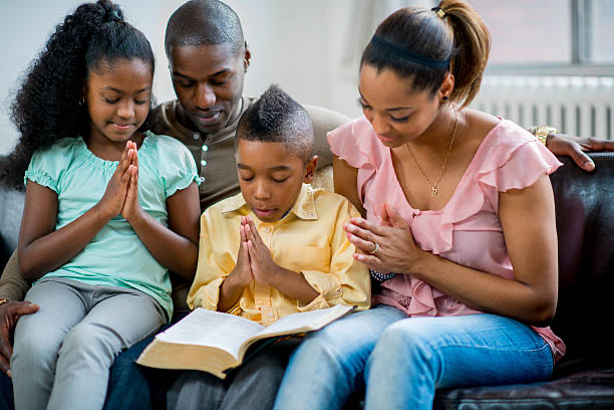
The reality is that the Catholic Church is facing a quiet but urgent crisis which is the erosion of faith within the home. The rediscovering of family catechesis, therefore, begins not only in parishes or schools but in kitchens, living rooms and bedrooms where prayers are whispered and stories of saints are told.
The Church has long proclaimed that parents are the first and primary educators in the faith. This is not just a pastoral suggestion but it’s a theological truth. According to Pope St. John Paul II, in his apostolic exhortation, Catechesi Tradendae: “Family catechesis, accompanies and enriches all other forms of catechesis”. And yet, in today’s world, this truth often lies dormant and forgotten beneath busy schedules, distracted routines, and the assumptions that catechesis is someone else’s job.
Many parents assume that religious education classes or youth ministry programs are responsible for forming their children in the faith. But without a living faith culture at home, these efforts often fall on shallow soil. According to Pope Francis, “Faith is passed on in the language of the home, in the dialect of the family.” Without that, catechesis risks becoming disconnected from daily life.
The General Directory for Catechesis places the family at the center of faith formation, affirming that the family is the “Church of the home” or “domestic Church” and a unique locus for catechesis. As such, it is the place in which the word of God is received and from which it is extended. Within the Christian family, parents are the primary educators in the faith and “the first heralds of the faith with regard to their children”. Here they foster the vocation which is proper to each child and foster with special care any religious vocation.
The goal is to go back to the basis, to rediscover the importance of family catechesis through an ongoing faith formation and development which goes on formally or informally within the family system. The family catechesis is centered on catechetical programmes which serve as opportunities for parents to catechize their children directly, or for spouses to catechize each other, or for children to catechize one another and their parents. Also, it is a religious education programmes in which parent fully participate in the faith formation of their children. At the same time, it is an evangelization aimed at parents to make them grow in the faith and to make them catechists of their children. This meaning has a double aim which is first directed to the parents themselves, and then the children.
Family catechesis happens in small moments; a father making the sign of the cross with his children before bed, a mother talking about Jesus on the drive to school, siblings learning to forgive and serving each other. These moments can help to rediscover family catechesis and become the building blocks of a deep, lived and lasting faith.
Going back to the basics does not signify a retreat into the past; rather an opportunity to rediscover a timeless truth that still has the power to transform today’s family. Family catechesis is not just a program but it embodies a path to love, a journey of discipleship, a witness to the faith and the passing on of the touch of faith to future generations.
If we want to renew the Church, we must first renew the family. If we want future generations to know Christ, we must reintroduce Him at home. “A family that prays together stays together”.
 Acta Diurna