Justin Joseph
The Vatican being the world’s smallest sovereign State, beyond physical boundaries, have the safety and wellbeing of 1.36 billion Roman Catholics to consider. The Supreme Pontiff aka The Pope is thus at the same time not only a religious leader, but also a person of political significance and value.
Pope Francis, the first Latin American pope, changed the face of papacy with simple warmth approach and pastoral accessibility. A simplified papal funeral made a fitting farewell for a pontiff who just three days after his surprise election expressed his desire for “a church that is poor and for the poor.” The way he chose to live as pope was itself his evangelisation. Opting for a very modest life, reaching out to the marginalised, standing for world peace to making himself available for selfies, he was a face and voice the Church in the world needed.
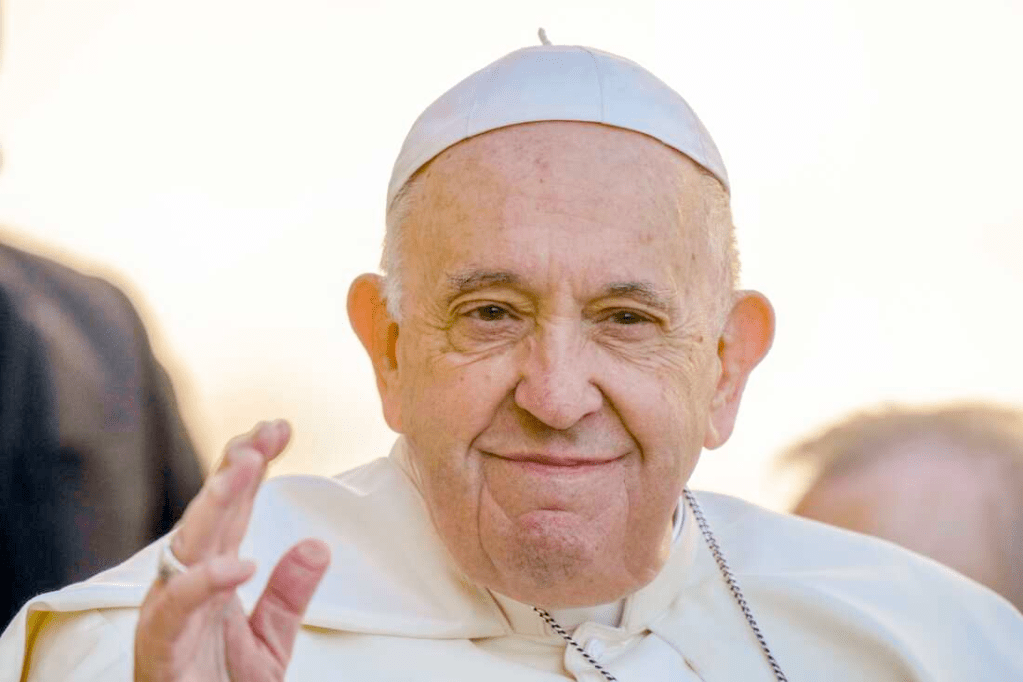
But there were lot of confusion and clamour with regards to various decisions, attitudes and statements made by Pope Francis on various occasions. Although well intended, quite often it resulted in debates and division. In the wake of his passing away, the question now remains, from his compassionate approach to debated politics, as to whether his legacy is to be continued?
Pope Francis was always called as People’s Pope and Pope of Transformation. Indeed, he stepped into a labyrinth of modern issues and he did not turn a blind eye to any of these. Pope Francis appointed a large number of cardinals from non-European countries, reflecting a more global outlook for the Church. He prioritized the needs of the poor and marginalized, emphasizing the Church’s role in serving society’s most vulnerable members. He emphasized Church as a field hospital, a “church that goes out to the streets” rather than a “sick, withdrawn church” and called the ‘Shepherds’ to be ‘with the smell of the sheep’.
He constantly called the church to give its attention to the “periphery,” to those places and peoples previously discounted and disregarded. ‘Pope Francis saw the world from the bottom up,’ one could say. He was keen in the upkeep of Social Justice. In his encyclical, Laudato Si, climate change was pointed out as a moral issue, calling to action the consumeristic political policies. He addressed issues like immigration, advocating for the protection of migrants and criticizing anti-immigration policies. He was also a man of dialogue, and listening was his forte. From interfaith dialogues to listening to the victims of various scandals and abuses, including that of the clergy, he was ready to apologise and reconcile as a humble Shepherd.
Pope Francis implemented changes within the Vatican, including increased financial transparency and measures to investigate bishops who abused or covered up scandals. He also challenged the institution’s perceived focus on power and bureaucracy, calling for a more humble and merciful Church. He often used more informal language and style in conveying church documents, being able to connect with people.
On looking at the other side of the coin, the papacy of Pope Francis was marred with frowns and controversies. He tried to break off many millennia old traditions of the Church; opened up many high-level Vatican offices to women and lay people, ambiguities regarding the same-sex blessings and the like. He was always criticised for ‘sowing confusion’ in his decisions and comments regarding many religious as well as socio-politico matters.
A footnote in Amoris Laetitia advocating access to communion for divorced and remarried couples was a huge controversy that happened during his papacy, which unofficially sealed an open rift with the conservatives. The re-founding of the John Paull II institute for Marriage and Family, stepping away from its original vision added fuel to the fire. Later in 2021, restrictions on the celebration of Traditional Latin Mass met with enormous backlash, some even calling him as cruel.
On top of all, the whole Catholic Church suffered under the Amazon/ Pachamama controversy. This happened in 2019, with debates exploding over indigenous spirituality. It became heated when Pope Francis participated in a ceremony where the statues were displayed and blessed opening the Pan-Amazonian Synod. This was allegedly supposed to showcase the enculturation of Indigenous spirituality within Catholic liturgy, having many cultural elements including the now infamous Pachamama (Earth Mother deity) statue (which was later stolen and thrown into River Tiber as an outcry). This was the most controversial moment in his Papacy, reviving debates not only on pagan worship, women’s ordination, and the married priesthood, but also internal divisions over the Catholic liturgy and the proper interpretation of the Second Vatican Council.
His clear decision to get involved in what are conventionally seen as political debates, from economics to migration policy has been a source of debate nearly from the beginning. From his routine criticism of the capitalist system and “trickle-down” economics, to his repeated advocacy for an open-door policy for migrants and refugees within Europe and beyond, which caused widespread displeasure among civilians and politicians alike.
His urgent calls for peace in Ukraine but without condemning the aggression and responsibility of Russia, his silence on China’s oppression of religious minorities – persecution of the likes of Uyghurs and the dismantling of Hong Kong’s freedoms, never praying publicly for them and his harsh condemnations of Israel’s invasion of Gaza where Israel accused Pope of ‘double standards’ ignoring the cruelty of Hamas; were some of them. His leadership style could also be unpredictable, as he would cancel plans after leaks by journalists and abandon promises.
Pope Francis has indeed left a legacy behind; that of compassion and mercy, a voice for the voiceless. He tried to make the church more global and welcoming. At the same time, after a decade of heated debates, confusions and controversies, many demand a change in approach as well. One could say, what we need now is a mixture of the previous three – the vigour of St John Paul II, the intelligence of Pope Benedict and the compassion of Pope Francis. As always, it’s a collaboration of the Divine and Human, the Holy Spirit and the Conclave. Let’s watch and pray as the world eagerly awaits the next pope….

